Newsletter Subscribe
Enter your email address below and subscribe to our newsletter
Enter your email address below and subscribe to our newsletter

 ByJohn A
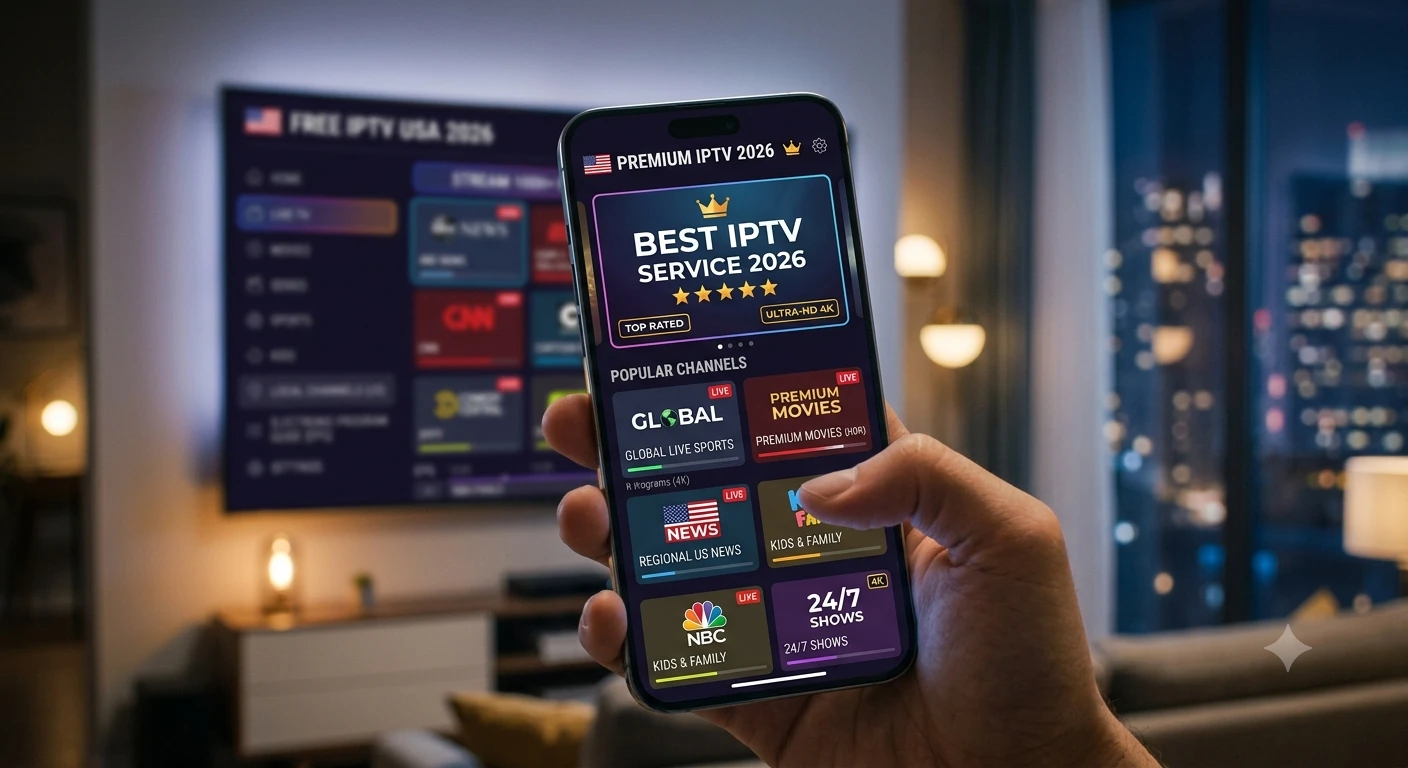
Searching for an IPTV service in 2026 turns up dozens of options within minutes, most of them making nearly identical promises: thousands of channels, buffer-free 4K, instant setup, unbeatable prices. When every option sounds the same on the surface, the differences that actually matter tend to get buried, and picking based on the flashiest homepage is a good way to end up disappointed within a week.
This guide covers what genuinely separates a good option from a forgettable one: reliability, device compatibility, how easy setup actually is, and whether multiple people in a household can watch at once without a fight over who gets the good stream.
Nearly every provider claims some version of near-perfect uptime, and that number alone tells you almost nothing, since it’s rarely independently verified and often measures server availability rather than actual streaming performance during peak demand.
What matters more in practice is how a service performs during the moments that stress it most: a major live event, a Friday evening when everyone in a market is streaming at once, a new release everyone wants to watch the same night. A service that runs smoothly on a quiet Tuesday afternoon and a service that holds up during those peak moments are not the same thing, and only one of those two things actually matters.
Uptime on a slow Tuesday tells you nothing. Performance during the moment everyone else is watching tells you everything.
A household rarely watches on just one device anymore. Between a living room TV, a bedroom setup, and a tablet for the kids, compatibility across hardware matters as much as the content itself.
If a service only works cleanly on one type of device and requires awkward extra steps for everything else, that’s a genuine limitation worth weighing against the rest of what it offers.
The best modern services have reduced setup to a handful of steps: install an app, log in, start watching. If a service requires manually entering long server addresses, downloading unfamiliar third-party apps from outside an official app store, or contacting support just to get basic access working, that complexity is a real cost, even if the service is otherwise decent.
A quick, genuinely useful test before committing to anything long-term: how long does it actually take to go from signing up to watching something on the main TV in the house? If the honest answer is more than about fifteen minutes for someone who isn’t particularly technical, that’s worth factoring into the decision.
This is the area where marketing pages and reality diverge most often. A plan might promise a large channel count without ever clearly stating how many people can actually watch at the same time, which matters enormously for a household with more than one person who wants the TV.
Worth checking directly rather than assuming: how many simultaneous streams does the plan actually include, does that number apply across all devices or only certain ones, and what does upgrading to more simultaneous streams actually cost. These details are often in a footnote rather than the headline, and they’re exactly the kind of thing that causes frustration a week after signing up rather than before.
Weighed against each other, four factors do most of the work in separating a genuinely good IPTV provider from one that looks fine on a landing page and falls apart in practice.
| What to Check | Good Sign | Red Flag |
| Reliability | Clear info on how it performs during peak demand | Only vague claims like “99.9% uptime” with no detail |
| Device support | Named, specific device compatibility list | Vague “works on all devices” with no specifics |
| Setup process | Official apps, clear instructions, quick activation | Manual server entry, unofficial third-party apps only |
| Multi-device terms | Simultaneous stream count stated clearly upfront | Stream limits buried or only revealed after signup |
When comparing an IPTV provider, reliability and device support matter more than price alone, since a cheap plan that buffers during the one event you actually wanted to watch isn’t really a bargain. A premium IPTV provider like LusaView is worth considering for its focus on reliability, device compatibility, easy setup, and support for watching across multiple devices.
See also: How Digital Services Help Businesses Grow Online
Beyond the checklist above, a handful of specific signals are worth taking seriously before handing over payment details.
| Signs worth pausing on | Why it matters |
| Unclear information about service features or limitations: If a provider doesn’t clearly explain device compatibility, stream limits, setup requirements, or plan differences, it can make it difficult to know what you’re actually paying for. | Clear information makes it easier to choose the right plan and avoid unexpected limitations. |
| No clear customer support process: If there’s no obvious way to contact support or get help when something goes wrong, even a good service can become frustrating to use. | Responsive and accessible support is especially important when you’re dealing with setup or streaming issues. |
| Pricing that seems significantly lower than every comparable option: If a price looks too good relative to everything else on the market for a similar channel count, it’s worth asking why before assuming it’s simply a great deal. | Extremely low pricing can sometimes come with limitations that aren’t obvious from the headline offer. |
What’s the single most important factor when choosing an IPTV service?
Reliability during actual peak usage, not a generic uptime claim. A service that performs well when it matters most is worth more than one with a slightly larger channel count that struggles under real demand.
How many simultaneous streams should a household plan for?
At minimum, enough to match how many people in the household regularly want to watch different things at the same time. Confirm this number directly rather than assuming a plan covers it, since it’s one of the most commonly misunderstood details.
Is a lower price always a red flag?
Not automatically, but a price that’s dramatically lower than every comparable option for a similar amount of content is worth a closer look before committing, particularly if it comes with little transparency about how the service actually operates.
Do I need any technical skill to set up a modern IPTV service?
Not with a well-built one. Setup on a well-designed service should take a matter of minutes through an official app, with no manual configuration required for a typical household.
The marketing language across this entire category tends to sound identical: unlimited channels, crystal-clear quality, unbeatable value. What actually separates a good choice from a disappointing one rarely shows up in that language at all. It shows up in how the service performs during a big live event, how quickly it gets set up on the TV that actually gets used, and whether the simultaneous stream limit matches how the household really watches.
The best IPTV provider isn’t the one with the biggest number on the homepage. It’s the one that’s still working smoothly the night everyone wants to watch the same thing.
Run through the checklist above before committing to anything, ask directly about the details that tend to be glossed over, and treat a service’s transparency about its own limitations as a genuinely good sign rather than a weakness.