Newsletter Subscribe
Enter your email address below and subscribe to our newsletter

 ByJohn A
A few years ago, the idea of an AI answering your business phone sounded like science fiction. Today it’s a real option, and a tempting one. AI receptionists are available around the clock, never call in sick and can be set up in an afternoon.
So should you switch? The honest answer is: it depends on what your callers are calling about. AI has genuine strengths, and so do people. Here’s how to tell which one your business needs.
It’s worth giving AI its due, because it has real advantages in the right situations.
If most of your calls are “What time do you close?” or “Can I book Tuesday at 3pm?”, AI may serve you well.
The trouble starts when a call stops being routine, and many of the calls that matter most are not routine.
Emotion and urgency. Someone calling about a burst pipe, a workplace incident or a sick relative doesn’t want a menu of options. They want to feel heard. AI can imitate empathy in its wording, but callers often sense the difference, and a clumsy response at a stressful moment can do real damage to trust.
Accents, noise and unclear speech. Callers ring from cars, building sites, busy streets and hospital corridors. They mumble, interrupt, spell names in unusual ways and talk over the top of the system. Speech recognition has improved, but errors in names, addresses and phone numbers still happen, and a wrong digit means a lost lead.
Judgement calls. A human operator can recognise that “the lift is making a funny noise” and “there’s someone stuck in the lift” are very different situations, even if the caller never says the word “urgent”. Deciding what to escalate, and when, takes context and common sense.
Unexpected questions. People don’t stick to scripts. When a call goes off-piste, a person adapts on the spot. An automated system may loop, misunderstand or simply give up.
Confidentiality and sensitive information. For medical practices, legal firms and similar businesses, callers are often sharing private details. Many people are more comfortable knowing a real person is on the line, and businesses may have additional obligations around how that information is collected and stored.
Caller preference. Plenty of people simply dislike talking to a machine. Some will hang up as soon as they realise they’re not speaking to a person, and you’ll never know they called.
A human receptionist or live answering service tends to come out ahead when:
See also: How Better Branding Can Give a Tech Website a More Professional Edge
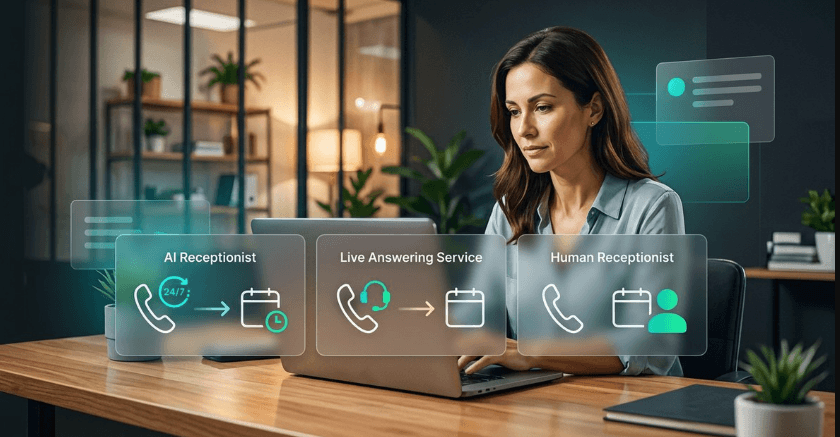
Many businesses find a blended approach works best, using automation for genuinely simple tasks like online booking and FAQs, while routing phone calls to a real person, especially after hours, during peak periods or whenever the caller needs to be understood rather than processed.
A service like Call Service is an example of the human-first option: calls are answered by real people in your business name, messages are taken according to your instructions, and urgent matters can be passed on or escalated the way you specify. It means your callers get a genuine conversation, and you get accurate messages without being tied to your phone.
AI receptionists are a useful tool, and they’ll keep improving. But the question isn’t which technology is more advanced. It’s what your caller needs in that moment.
If they need quick, simple information, a machine can deliver it. If they need to feel confident that someone has listened, understood and will act, a real voice still wins.