Newsletter Subscribe
Enter your email address below and subscribe to our newsletter
Enter your email address below and subscribe to our newsletter

 ByJohn A
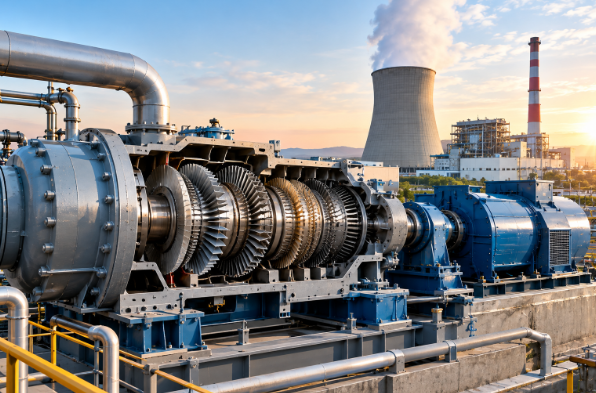
A steam powered turbine is a mechanical device that converts the thermal energy of pressurized steam into rotational energy. The steam passes through specially shaped blades, causing the turbine shaft to rotate. This rotational motion can then drive an electrical generator, pump, compressor, or other industrial equipment.
Steam turbines have been used in power generation for more than a century because they can handle large amounts of energy and operate with different heat sources. Coal, natural gas, nuclear reactions, biomass, geothermal heat, and industrial waste heat can all provide the energy required to produce steam.
The efficiency of the system depends on factors such as steam pressure, temperature, turbine design, condenser performance, and operating conditions.
See also: Rooflight Suppliers: A Practical Guide to Choosing, Comparing and Ordering Rooflights
Inside a turbine, steam moves through several stages rather than releasing all of its energy at once. Stationary blades guide the steam toward rotating blades at the correct angle. As the steam changes pressure and velocity, it transfers energy to the rotating shaft.
Large turbines may contain high-pressure, intermediate-pressure, and low-pressure sections. Steam gradually expands as it travels through these sections. After leaving the turbine, the steam can be condensed back into water and returned to the boiler or heat source.
This closed-loop arrangement reduces water consumption and allows the same working fluid to circulate repeatedly.
The generator is connected directly or indirectly to the turbine shaft. As the shaft rotates, electromagnetic induction produces electrical power. The amount of electricity generated depends on the turbine’s capacity, steam conditions, and generator characteristics.
Steam and gas turbines use different working principles. A gas turbine burns fuel and uses the resulting hot gases to rotate turbine blades. A steam turbine, by contrast, uses steam produced by an external heat source.
A gas turbine power system can start relatively quickly and is widely used for applications that require flexible electricity generation. Steam turbine systems generally involve more equipment because they require components such as boilers, condensers, feedwater systems, and steam piping.
A gas turbine power station typically includes compressors, combustion chambers, gas turbines, generators, and supporting systems. In some facilities, the hot exhaust from a gas turbine is recovered and used to produce steam.
That arrangement leads to a combined-cycle configuration.
A combined cycle turbine system uses both gas and steam turbine technology to extract more useful energy from the same fuel.
The gas turbine produces electricity first. Instead of allowing its hot exhaust gases to escape directly into the atmosphere, the exhaust can pass through a heat recovery steam generator. This equipment uses the remaining heat to produce steam.
The steam then drives a separate turbine and generator.
The arrangement allows energy that would otherwise be lost through exhaust gases to contribute to additional electricity production. Combined-cycle plants can therefore achieve higher thermal efficiency than many simple-cycle gas turbine configurations.
Steam turbines are not limited to utility-scale electricity generation. They are also found in refineries, chemical plants, paper mills, sugar mills, steel facilities, and other industrial operations.
Some industrial facilities use turbines for combined heat and power. Electricity is generated while extracted steam is supplied to manufacturing processes.
Other installations use smaller turbines to drive mechanical equipment directly. This can be useful where steam is already available as part of an industrial process.
The turbine’s operating pressure, temperature, size, speed, and intended application determine its design.
Regular steam turbine maintenance helps identify mechanical and operational problems before they cause major equipment damage. Maintenance programs commonly include vibration monitoring, inspection of bearings, lubrication checks, seal inspections, valve testing, and examination of turbine blades.
During major shutdowns, technicians may inspect internal components for erosion, corrosion, cracking, deposits, and other forms of wear.
Alignment is another important consideration. Misalignment between the turbine and driven equipment can contribute to vibration, bearing damage, and premature component failure.
Steam quality also affects turbine condition. Moisture carried into later turbine stages can contribute to blade erosion, particularly at high operating speeds.
Maintenance intervals vary according to turbine design, operating hours, manufacturer recommendations, load conditions, and site procedures.
Although they operate differently from steam turbines, gas turbines also require regular inspection and servicing. Gas turbine maintenance commonly includes compressor inspections, combustion-system checks, fuel-system inspections, vibration monitoring, lubrication-system maintenance, and examination of turbine blades.
Hot-section components experience particularly demanding conditions because they are exposed to high temperatures and mechanical stresses.
Inspection methods can include borescope examinations and other non-destructive testing techniques. Detecting cracks, deposits, corrosion, or abnormal wear early can help maintenance teams plan repairs during scheduled outages.
Preventive maintenance can extend equipment service life, but components eventually require repair or replacement. Gas turbine repair may involve restoring damaged blades, repairing combustion components, refurbishing bearings, or addressing problems found during inspections.
Similar principles apply to steam turbines. Damaged blades, worn seals, bearing problems, shaft issues, and casing defects may require specialized repair work.
The appropriate repair method depends on the component, material, type of damage, operating history, and manufacturer’s specifications. In some cases, replacing a damaged component may be more practical than repairing it.
Several operating conditions influence turbine efficiency and reliability. Steam pressure and temperature directly affect the amount of energy available for expansion. Condenser vacuum also matters because lower exhaust pressure can allow greater expansion through the turbine.
Blade condition is another major factor. Deposits, erosion, corrosion, and mechanical damage can alter the aerodynamic characteristics of turbine stages.
Poor lubrication, excessive vibration, shaft misalignment, and unsuitable operating conditions can also reduce reliability.
Modern monitoring systems can track parameters such as temperature, pressure, vibration, rotational speed, and bearing condition. Engineers can use this information to identify unusual operating patterns and schedule inspections before a failure occurs.
The appropriate turbine system depends on the application’s heat source, required output, operating profile, steam conditions, and available infrastructure.
A steam turbine may be suitable where high-pressure steam is already produced or where a large heat source can support a steam cycle. Gas turbines can suit facilities requiring rapid startup and flexible operation. Combined-cycle systems can be considered where recovering gas turbine exhaust heat is technically and economically practical.
Understanding the differences between these technologies helps engineers evaluate equipment according to the actual requirements of a facility rather than relying on a single turbine type.
A steam powered turbine remains an important part of industrial and utility power generation because it can convert heat from many different sources into mechanical and electrical energy. Its performance depends not only on turbine design but also on steam conditions, supporting equipment, operating practices, and regular inspection.