Newsletter Subscribe
Enter your email address below and subscribe to our newsletter
Enter your email address below and subscribe to our newsletter

 ByJohn A
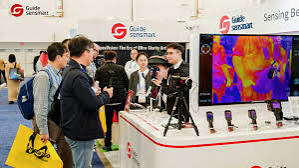
Search and rescue operations in fire emergencies often take place in conditions where normal vision is severely limited. Smoke, darkness, intense heat, and damaged structures can make it difficult for firefighters to identify people, locate hazards, and navigate safely. A firefighter thermal camera for search and rescue provides valuable thermal information that can help emergency teams identify heat sources and locate people when visibility is poor.
For professional emergency response, the right thermal camera should combine reliable thermal imaging, durable construction, practical controls, and clear image presentation. Guide Sensmart develops thermal imaging solutions designed to support demanding inspection and emergency applications. Understanding the essential features of these cameras can help organizations select equipment that fits their operational requirements.
Traditional cameras depend on visible light, which becomes less useful when an area is filled with smoke or is completely dark. Thermal imaging works differently by detecting infrared radiation and converting temperature differences into a visible image.
During a rescue operation, this capability can help firefighters identify warmer objects against cooler surroundings. A person may appear as a distinct thermal shape, while heated doors, walls, equipment, or other objects can indicate potential hazards.
A thermal camera does not replace established firefighter training or other emergency equipment. Instead, it provides additional information that can support situational awareness and help teams make informed decisions in challenging environments.
Thermal sensitivity is one of the important characteristics to consider when selecting a thermal camera for emergency response. A camera with good thermal sensitivity can distinguish relatively small differences in temperature.
This can be useful when searching through an environment containing multiple heat sources. For example, a firefighter may need to distinguish a person from a heated background or identify a developing hot area during an inspection.
Guide Sensmart thermal imaging solutions are designed to provide detailed thermal information for professional applications. Selecting an appropriate sensitivity level depends on the specific environment, operating conditions, and intended use.
Image clarity is especially important when firefighters need to interpret a thermal scene quickly. Resolution affects how much detail can be represented in the thermal image.
A higher-resolution thermal sensor can provide more image detail, which may help users recognize objects, identify heat patterns, thermal camera for victim detection in fire and understand the surrounding environment. A clear display is also valuable because emergency personnel may need to interpret information while wearing protective equipment.
When evaluating a firefighter thermal camera for search and rescue, users should consider thermal resolution, display quality, image refresh performance, and overall usability rather than focusing on a single specification.
Fire scenes can contain objects with significantly different temperatures. Equipment used in these environments therefore needs an appropriate temperature measurement range.
A broad temperature range can help users observe both relatively moderate heat sources and extremely hot areas. This information can contribute to hazard awareness and support assessment of areas where temperatures may be changing.
However, temperature measurement performance can vary depending on environmental conditions, distance, emissivity, reflections, and other factors. Professional users should understand the camera’s specifications and operating limitations before relying on temperature readings.
Firefighters operate in physically demanding environments. Thermal imaging equipment may encounter heat, dust, moisture, vibration, and accidental impacts.
A suitable emergency-response thermal camera should therefore have durable construction and appropriate protection against environmental conditions. Compact dimensions and secure handling can also make a difference when firefighters need to move through restricted spaces.
Guide Sensmart provides professional thermal imaging equipment intended for demanding field applications. When selecting equipment, organizations should review its environmental protection ratings, operating temperature specifications, impact resistance, and other relevant durability information.
Emergency situations require equipment that can be operated without unnecessary complexity. Firefighters may be wearing gloves and working under stressful conditions, so controls should be straightforward and accessible.
Important functions should be easy to locate, allowing users to quickly switch between imaging modes, adjust settings, capture information, or review important thermal details.
A well-designed interface can reduce unnecessary distractions and help personnel focus on the surrounding situation. Practical ergonomics are therefore just as important as technical specifications when choosing a thermal camera for search and rescue.
Color palettes can make different thermal patterns easier to interpret. Depending on the application, users may benefit from different ways of displaying temperature differences.
A palette designed to highlight hot areas can help emphasize heat sources, while another mode may provide a more balanced view of the overall thermal scene. Having multiple display options allows professionals to select a presentation that suits the conditions.
The best configuration depends on user preference, environmental conditions, and operational requirements. Training personnel to understand the selected thermal palette is also important for consistent interpretation.
Battery life is another important consideration for emergency equipment. Search and rescue operations may last longer than initially expected, making reliable power essential.
A thermal camera should provide sufficient operating time for its intended mission, while practical charging and battery-management options can simplify preparation between deployments.
Organizations using Guide Sensmart equipment should review the specific battery specifications of the selected model and establish appropriate charging, inspection, and maintenance procedures.
Firefighters already carry substantial protective and operational equipment. A thermal camera should therefore be practical to carry and handle during movement.
A compact and lightweight design can make it easier to hold the camera for extended periods and maneuver through narrow areas. Ergonomic design can also improve usability when users need to operate the device while wearing gloves.
Portability becomes particularly important for search and rescue because firefighters may need to move rapidly between different areas while continuously assessing their surroundings.
See also: Business Litigation Lawyer: A Practical Guide to Handling Business Disputes
Some emergency-response thermal cameras provide image or video recording capabilities. These features can be useful for documenting thermal conditions and reviewing information after an operation.
Recorded thermal information may also support equipment inspections, training activities, maintenance assessments, and incident documentation when appropriate.
Guide Sensmart thermal imaging solutions can offer professional imaging capabilities suited to different applications. Users should select is thermal camera useful for firefighters recording features based on operational requirements, storage needs, and organizational procedures.
Even advanced thermal imaging technology requires proper training. A thermal image is not always a direct representation of what a person would see with the naked eye. Reflections, materials, airflow, smoke, environmental temperatures, and other factors can influence thermal information.
Firefighters should understand how to interpret thermal images and recognize the limitations of the equipment. Regular training can help personnel become familiar with controls, image interpretation, temperature measurement, and appropriate operating procedures.
Equipment should be treated as a decision-support tool rather than the sole source of information during an emergency.
Selecting a firefighter thermal camera requires consideration of the complete operational environment. Important factors include thermal resolution, sensitivity, temperature range, durability, battery performance, portability, display quality, controls, and recording capabilities.
Guide Sensmart offers thermal imaging solutions for professional users who need dependable thermal information in demanding conditions. Before purchasing, organizations should compare the specifications of available models with their specific response requirements and training procedures.
A firefighter thermal camera for search and rescue can provide valuable thermal awareness when smoke, darkness, and difficult environmental conditions limit ordinary visibility. Features such as strong thermal sensitivity, clear imaging, suitable temperature measurement, durable construction, simple controls, reliable battery performance, and portable design can all contribute to effective field use.
Guide Sensmart thermal imaging technology can support professionals seeking practical tools for emergency and inspection applications. With appropriate equipment selection, regular training, and proper operating procedures, thermal imaging can become an important part of a broader search and rescue strategy.