Newsletter Subscribe
Enter your email address below and subscribe to our newsletter
Enter your email address below and subscribe to our newsletter

 ByJohn A
A bathtub can serve as both a practical bathing area and a noticeable part of a bathroom’s overall design. One detail that can influence how the space looks and functions is the shower enclosure or door used around the tub.
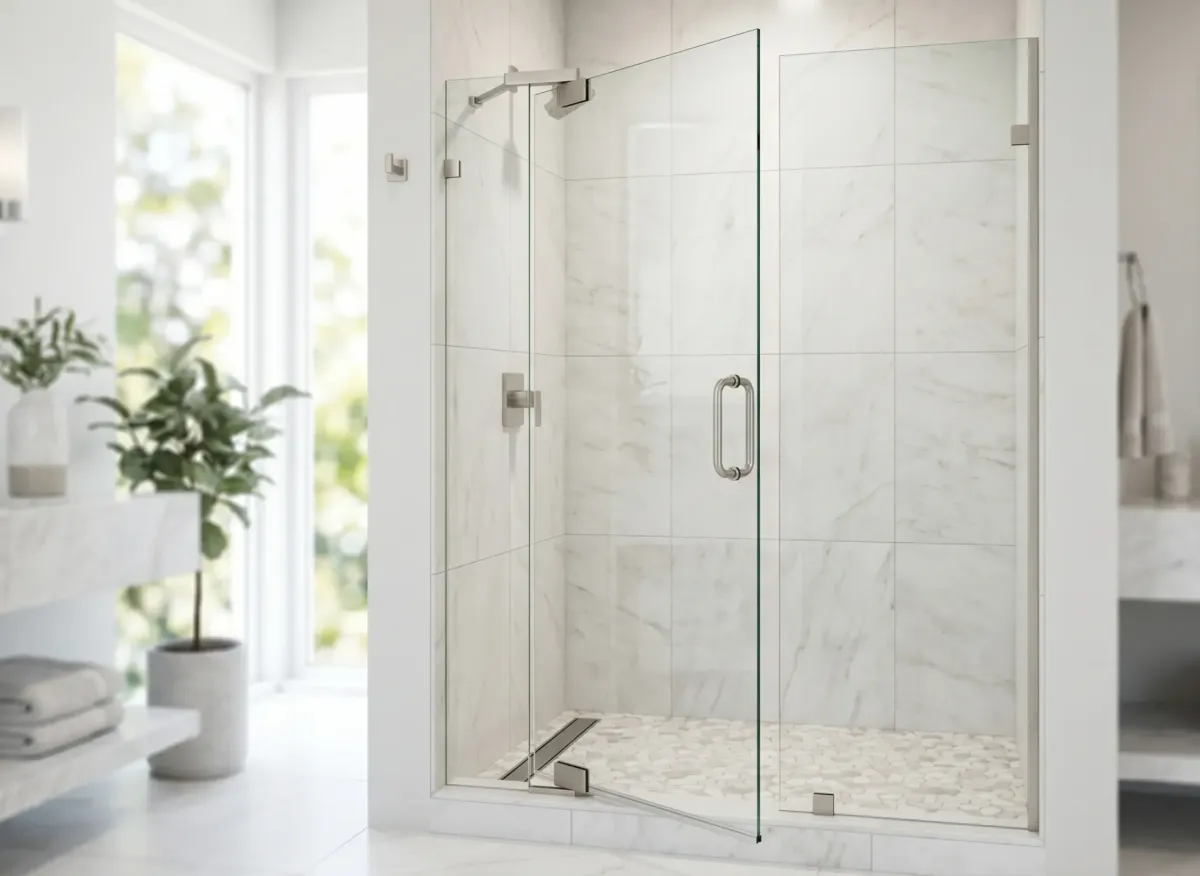
A bathtub swing glass door provides a clean alternative to shower curtains while making the bathing area feel more open. Unlike sliding systems, a swing door opens on hinges and can be designed around the available space, tub configuration, and bathroom layout.
Choosing the right system requires more than considering the appearance of the glass. Door movement, hardware, water containment, glass thickness, and installation conditions all need to work together.
A bathtub swing glass door is a hinged glass panel installed along the edge of a bathtub or showering area. Depending on the bathroom layout, the door may swing inward, outward, or use a configuration that combines fixed and moving glass panels.
The system can replace a traditional shower curtain and create a more defined enclosure around the tub.
Clear glass is a common choice because it allows the bathroom to retain an open appearance. Other glass options, including patterned, frosted, or textured finishes, can provide additional privacy and a different visual character.
The choice largely depends on the bathroom’s design and how much privacy is required.
One of the main advantages of a hinged door is its straightforward operation.
A swing door does not require tracks along the bottom in the same way many sliding systems do. This can create a cleaner appearance and may simplify cleaning around the bathtub edge.
It can also provide a wider opening, depending on the door size and available clearance. This can be useful when access to the tub needs to be as convenient as possible.
The trade-off is that a swing door requires sufficient clearance for its movement. The bathroom layout must therefore be assessed before selecting the door configuration.
Glass can visually separate the bathing area without creating a solid barrier.
A clear bathtub swing glass door allows light to pass through the enclosure, helping a smaller bathroom appear less divided. This can be particularly useful where the bathtub occupies a significant portion of the room.
Frameless or minimally framed designs can further reduce visual clutter, although the appropriate framing depends on the size and weight of the glass, hardware requirements, and installation conditions.
In larger bathrooms, the same design can create a clean transition between the tub and the rest of the room.
Bathroom doors are exposed to regular use, moisture, and accidental impacts, so safety glass is an essential consideration.
Tempered glass is commonly used for shower and bathtub enclosures because it is designed to break into smaller, less hazardous pieces if it fails. The appropriate glass thickness depends on the door dimensions, hardware, installation method, and applicable standards.
Glass should not be selected based solely on appearance. The door system needs to be engineered and installed according to the manufacturer’s requirements.
Professional installation is particularly important because incorrect hardware positioning or inadequate support can place unnecessary stress on the glass.
Both framed and frameless swing doors can work well around bathtubs.
A framed system uses metal profiles around some or all of the glass. These profiles can provide structural support and create a more traditional appearance.
Frameless systems use thicker glass and specialised hardware to minimise visible framing. The result is often a more contemporary look with fewer visual interruptions.
Semi-frameless designs sit between the two. They can provide some of the clean appearance of frameless glass while retaining framing where additional support is needed.
The choice should take into account bathroom style, door dimensions, hardware, budget, and installation requirements.
Door movement is one of the most important factors to consider.
Before installation, there needs to be enough space for the door to open without hitting a toilet, vanity, wall, towel rail, or other fixture. The position of the tub and surrounding floor area can determine whether an inward or outward swing is appropriate.
In some bathrooms, a fixed glass panel can be combined with a hinged door to control the opening while reducing the amount of glass that moves.
Accurate measurements are therefore essential. The finished bathroom should be assessed rather than relying only on standard door dimensions.
A glass door should help contain water, but its effectiveness depends on the complete enclosure.
The door needs to align correctly with the tub edge, and suitable seals or sweeps may be required along the bottom and sides. Hinges and other hardware should be installed according to the manufacturer’s specifications.
The bathroom’s showerhead position also matters. Water directed toward the door is more likely to escape than water directed toward the back wall.
Good design considers the direction of water, door position, tub dimensions, and sealing details together.
Hinges, handles, brackets, and seals are small components, but they have a major effect on how the door operates.
Common hardware finishes include chrome, brushed metal, matte black, and other decorative options. The finish can be matched with faucets, shower fittings, towel bars, and other bathroom accessories.
Hardware should also be suitable for a wet environment. Quality components can provide smoother door movement and better long-term resistance to moisture and corrosion.
Glass bathtub doors are relatively straightforward to maintain, but regular cleaning helps preserve their appearance.
Water spots and mineral deposits can build up on glass, especially in areas with hard water. Wiping the glass after use can reduce accumulation, while periodic cleaning can remove deposits that have already formed.
Seals should also be inspected from time to time. Damaged or deteriorated seals can allow more water to escape and may need replacement.
Hinges and handles should remain secure, and any change in the door’s movement should be checked rather than ignored.
Before purchasing a bathtub swing glass door, consider:
A professional measurement can help identify issues before the glass is ordered. This is especially useful for bathrooms with unusual tub dimensions, uneven walls, or limited clearance.
A bathtub swing glass door can give a bathroom a cleaner appearance while providing a more permanent alternative to a shower curtain. Clear glass can maintain visual openness, while hinged operation can offer convenient access and a relatively simple enclosure design.
The best choice depends on the dimensions and layout of the bathroom. Glass specification, door clearance, hardware, sealing, and installation all contribute to how well the finished system performs.
With accurate measurements and suitable installation, a swing glass door can make the bathtub area easier to use while giving the bathroom a more finished appearance.