Newsletter Subscribe
Enter your email address below and subscribe to our newsletter
Enter your email address below and subscribe to our newsletter

 ByJohn A
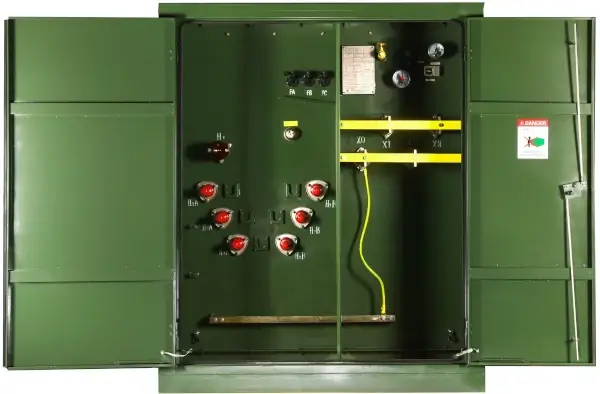
A 2500 kva transformer is designed for electrical systems that require substantial power capacity without moving into the much larger transformer classes used by heavy industrial facilities and utility networks. With a rating of 2,500 kilovolt-amperes, this type of transformer is commonly considered for commercial buildings, manufacturing facilities, infrastructure projects, data centers, and other sites with significant electrical loads.
Selecting the right transformer involves more than matching the KVA rating to the expected load. Voltage requirements, installation conditions, efficiency, cooling method, protection systems, and future load growth all have a bearing on the final specification.
A 2500 kva transformer can serve facilities where several electrical loads operate simultaneously. Large commercial complexes may use one to supply HVAC equipment, elevators, lighting, pumps, security systems, and general building services. Industrial plants may require the same capacity for motors, production equipment, control systems, and auxiliary machinery.
Typical applications include:
The actual suitability depends on the facility’s demand profile. A site with large motors or equipment that creates high starting currents may require additional engineering even when its calculated average demand appears to fit within 2,500 KVA.
KVA, or kilovolt-amperes, represents the apparent power capacity of a transformer. Unlike a simple kilowatt figure, KVA accounts for both real power and reactive power in an AC electrical system.
A transformer rated at 2,500 KVA can theoretically supply 2,500 KVA of apparent power under its specified operating conditions. The usable real power in kilowatts depends on the power factor of the connected load.
For example, at a power factor of 0.8:
2,500 KVA × 0.8 = 2,000 kW
At a power factor of 0.9:
2,500 KVA × 0.9 = 2,250 kW
Actual operating limits depend on the transformer’s design, ambient temperature, cooling arrangement, installation conditions, and applicable standards.
One of the first specifications to consider is the transformer’s construction.
Oil-filled transformers use insulating liquid for electrical insulation and heat transfer. They are widely used in outdoor substations and industrial installations where their cooling characteristics and high-capacity designs are suitable. Proper containment, fire protection, maintenance, and environmental considerations must be addressed during installation.
Dry-type transformers use solid insulation rather than liquid insulation. They are frequently selected for indoor installations, commercial buildings, and locations where the use of transformer oil is undesirable or restricted.
For a 2500 kva transformer, the choice between oil-filled and dry-type construction should be based on the installation environment, fire-safety requirements, maintenance arrangements, space limitations, and project specifications.
Voltage selection must match both the incoming electrical supply and the voltage required by downstream equipment. A transformer can be manufactured with different primary and secondary voltage configurations, so the nameplate specification should be established before procurement.
The design may also include:
Tap arrangements are particularly useful where the supply voltage can fluctuate. Depending on the project, an off-circuit tap changer or an on-load tap changer may be specified.
A transformer remains energized for long periods, which means its losses can contribute to operating expenses over many years. Transformer losses are generally divided into no-load losses and load losses.
No-load losses occur while the transformer is energized, even when there is little or no connected load. Load losses increase as the transformer carries more current.
For a facility operating around the clock, selecting equipment with suitable efficiency characteristics can have a noticeable effect on long-term electricity consumption. The purchase price should therefore be considered alongside expected operating hours, loading patterns, energy costs, and the transformer’s expected service life.
A 2500 kva transformer requires appropriate space, ventilation, clearances, access for installation and maintenance, and suitable electrical protection.
For outdoor installations, engineers may need to consider weather exposure, drainage, fencing, fire safety, cable routing, and physical protection. Indoor installations require particular attention to ventilation and heat dissipation because transformer losses produce heat during operation.
The installation also needs suitable protection equipment. Depending on the system design, this can include circuit breakers, fuses, surge protection, temperature monitoring, differential protection, and other protective devices.
Grounding is another fundamental part of the installation. The transformer tank, neutral system, and associated equipment must be grounded according to the applicable electrical standards and project requirements.
Choosing a transformer solely because its rating appears to match the facility’s present demand can create problems later. Load calculations should consider current consumption, peak demand, motor starting requirements, power factor, harmonic loads, and expected expansion.
For example, a facility currently operating at 1,800 KVA may appear to have sufficient capacity within a 2,500 KVA transformer. However, if the company plans to add production lines, HVAC equipment, or additional machinery, the available margin may disappear quickly.
Engineers should also avoid excessive oversizing. A significantly oversized transformer can operate inefficiently at low loads, while an undersized unit may run close to its thermal limits.
Routine maintenance helps identify developing problems before they result in an unexpected shutdown. Maintenance requirements vary according to transformer design and manufacturer recommendations.
For oil-filled units, inspections can include oil condition, leakage, temperature, bushings, connections, and protection equipment. Oil testing may also be performed to assess insulation condition and identify signs of internal problems.
Dry-type transformers generally require inspection of insulation, terminals, ventilation passages, connections, and accumulated dust or debris.
Thermal scanning can also help identify abnormal heating at connections and other components.
The technical specification should come before the commercial comparison. A supplier should be able to provide documentation covering the transformer’s ratings, losses, insulation system, impedance, testing, dimensions, weight, cooling arrangement, and applicable standards.
Factory testing is another important consideration. Depending on the project, routine and type tests may be required to verify electrical and mechanical performance.
Buyers should also consider spare parts availability, warranty terms, technical support, delivery requirements, and the supplier’s ability to support installation and commissioning.
A 2500 kva transformer can be a suitable choice for facilities with substantial three-phase electrical demand, but the 2,500 KVA rating is only one part of the specification. Voltage levels, load characteristics, installation conditions, efficiency, cooling, protection, and future expansion should all be assessed before an order is placed.
A properly specified transformer can provide dependable power distribution for years, while an unsuitable specification may lead to unnecessary losses, capacity limitations, overheating, or costly modifications. Working from an accurate load study and a clearly defined technical specification gives electrical engineers and project owners a much stronger basis for selecting the right transformer.